
You spent three hours crafting that blog post. Perfect headline, killer intro, images on point. You hit publish, watch the traffic spike for a day or two, and then… crickets.
Welcome to the 48-hour content death spiral. It’s not you. It’s how the internet works now.
Key Takeaways
- The average blog post gets 75% of its traffic in the first week, then becomes invisible
- Social algorithms prioritize new over good—your best content has the same lifespan as lunch photos
- The 21-day maturity rule: Wait 3 weeks before reposting to avoid audience fatigue
- Smart duplication means changing titles, images, and angles—not copy-pasting
- Platform hierarchy matters: Pinterest and Flipboard reward reposts; Facebook and Instagram punish them
- Strategic recycling turns 20 articles into 80+ posts without writing new content
- Automation handles the heavy lifting: maturity tracking, canonical URLs, shortlink generation
The Brutal Truth About Content Lifespan
Here’s what happens to your content after you publish:
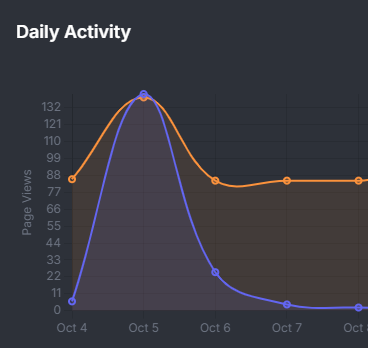
First 24 hours
Your RSS subscribers see it. Maybe some social media followers catch it. Traffic peaks.
On second day
Algorithms move on. Your post gets buried under newer content. Traffic drops 70-80%.
And after?
Your masterpiece becomes a digital ghost town. Occasional search traffic if you’re lucky.
The average blog post gets 75% of its total traffic in the first week. After that? It’s basically invisible unless someone actively searches for it.
Why This Happens (And Why It’s Getting Worse)
Social media algorithms prioritize new over good. Your perfectly researched guide on WordPress security gets the same lifespan as someone’s lunch photo.
Search engines take weeks or months to properly index and rank new content. By the time Google decides your post is valuable, your audience has already forgotten about it.
And let’s be honest—most of your followers aren’t online during that magical 48-hour window anyway. Different time zones, busy schedules, algorithm lottery. Your content never even had a fair shot.
The Fix: Strategic Content Recycling
Good news: Your content doesn’t have to die. You just need to give it multiple lives.
The 21-Day Maturity Rule
Wait 3 weeks before reposting. Why? Because:
- Your audience’s memory is short (no offense to them)
- Algorithms treat it as “new” content
- You avoid the “didn’t I just see this?” fatigue
- Your followers will discover the article with a new angle, maybe some missed previous one
- New followers since the original post get to discover it
Think of it like TV reruns. Nobody complains when their favorite show airs again a month later. Your blog posts deserve the same treatment.
Smart Duplication, Not Copy-Paste
Here’s where most people screw up: They repost the exact same thing with the exact same title.
Instead, do this:
- Change the title angle – “5 WordPress Security Tips” becomes “The Security Mistake 90% of WordPress Sites Make”
- Update the intro – Fresh hook, same valuable content
- Swap the featured image – Different visual, same post
- Adjust the excerpt – New teaser for social shares
Same core content. Different packaging. The algorithm sees it as new. Your audience sees it as valuable (again).
Platform-Specific Recycling
Not all platforms play by the same rules—and some aren’t even designed for bloggers anymore. Let’s be honest about what works and what’s a waste of your time.
Platforms listed in order of blogger-friendliness—from best to worst.
Create fresh pins for each repost—new images, new text overlays. Pinterest rewards fresh content but has strict spam limits that aren’t clearly defined. Repin the same URL too aggressively and you risk shadow bans or account penalties. Space out your pins (think weeks, not days) and always create unique visuals for each push.
This is the goldmine most bloggers ignore. Flipboard was built for articles, not selfies. It treats each flip as fresh content and actually wants people to click through to read your full post. No algorithmic punishment for external links. No engagement-baiting required. Create a magazine, flip your reposts with new commentary, and watch the long-tail traffic roll in. If you’re a blogger and you’re not on Flipboard, you’re leaving traffic on the table.
Tumblr
The forgotten gem of blogging platforms. Tumblr’s reblog culture is literally built around content recycling—it’s a feature, not a bug. Your posts can resurface months or years later through reblogs, reaching entirely new audiences. The platform doesn’t penalize external links, and the community actually reads long-form content. If your niche aligns with Tumblr’s active communities (art, fandom, social commentary, photography), it’s worth the effort. Just remember: Tumblr rewards authenticity and quirky personality over corporate polish.
YouTube
Your older videos rarely get recommended unless they’re evergreen hits. Create “throwback” or “updated” versions referencing your original content. Link to the full article in descriptions. YouTube’s algorithm loves watch time, not freshness—use that to your advantage with compilation or “best of” content.
Facebook & Instagram
Let’s not sugarcoat this—these platforms punish external links. Meta wants you trapped in their ecosystem. Post an article link? Your reach tanks. Instagram won’t even make links clickable in captions. Sure, you can share quote graphics or teasers, but driving actual blog traffic? It’s an uphill battle. Use them for brand awareness if you must, but don’t expect meaningful referral traffic. The algorithm is working against you.
TikTok
Content lifespan is measured in hours, not days. Repurpose your blog insights into quick tips or “myth-busting” videos. TikTok’s algorithm doesn’t punish recycling—it punishes boring content. Same message, different hooks. Good for brand building, terrible for driving blog traffic (no clickable links unless you have 10K+ followers).
X (Twitter)
Tweets have a 15-minute half-life. Schedule the same article link 3-5 times with different commentary angles. Your followers won’t see all of them anyway thanks to the algorithm. Use threads to break down complex posts into bite-sized insights. X still allows external links without penalty—one of the few platforms that does.
Mastodon/Bluesky (Fediverse)
No algorithmic suppression. No shadow bans. No engagement-baiting required. Your followers actually see your posts in chronological order. Repost freely without penalty. The Fediverse rewards authenticity over gaming the system—and that includes honest content recycling. These platforms were built by people who believe the internet should connect you to ideas, not trap you in walled gardens. Plus, with decentralized servers, your content lives on community-owned infrastructure, not corporate platforms that can change the rules overnight.
Google Search
Use canonical URLs to tell Google “this is a repost, don’t penalize me.” Smart systems handle this automatically. But here’s the brutal truth: even ranking well doesn’t guarantee traffic anymore. Google’s AI Overviews now summarize your hard work directly in search results. Users get their answer without clicking through. You provide the expertise, Google provides the “answer,” and you get… nothing. Maybe a citation buried in a dropdown if you’re lucky. SEO isn’t dead, but it’s getting harder to justify the effort when AI is eating your lunch. This is why diversifying your traffic sources—through strategic reposting across platforms that actually value content—matters more than ever.
Real Example: Food Blogger Math
Let’s say you publish 3 solid articles per month—36 posts per year. Without recycling:
- 36 posts × 48 hours of visibility = 1,728 hours of traffic per year
- That’s 72 days of actual content performance out of 365 days
With strategic recycling (repost every 21 days, 4× per article):
- 36 posts × 4 reposts × 48 hours = 6,912 hours of traffic
- That’s 288 days of content performance
Same effort. 4× the results.
Here’s where it gets exponential: After year one, you have 36 articles in rotation. Keep adding 3 new posts per month while recycling the back catalog. By year two, you’re generating consistent traffic from 72+ articles, each cycling through reposts. Your content library becomes a compounding traffic engine—not a graveyard.
The System Does the Heavy Lifting
Here’s the thing: You shouldn’t have to remember when 21 days is up. You shouldn’t have to manually track which posts are ready to repost. You shouldn’t have to duplicate posts by hand.
That’s where automation comes in. Set it once, let the system track maturity dates, remind you when content is ready, and handle the technical stuff (canonical URLs, SEO protection, shortlink generation).
Your job? Create great content. The tool, MyPost2, handle the recycling.
One Thing You Can Do Today
Pick your top 3 posts from last month. Schedule them to repost 21 days from now. Change the titles slightly. Swap the images.
That’s it. You just extended the life of three posts without writing a single new word.
Bottom line: Your content isn’t dying because it’s bad. It’s dying because you’re not giving it a second chance. Fix that, and watch your traffic compound instead of decay.
Alright, I’m off to duplicate my coffee—the original’s gone cold and I need a fresh version with the same caffeine kick. Same energy, different mug. You get it.
Ready to Break the 48-Hour Death Spiral?
Stop watching your best content disappear after two days. MyPost2 automates the entire recycling process—from maturity tracking to smart duplication to shortlink generation.
One article. Multiple lives. Zero manual work.